

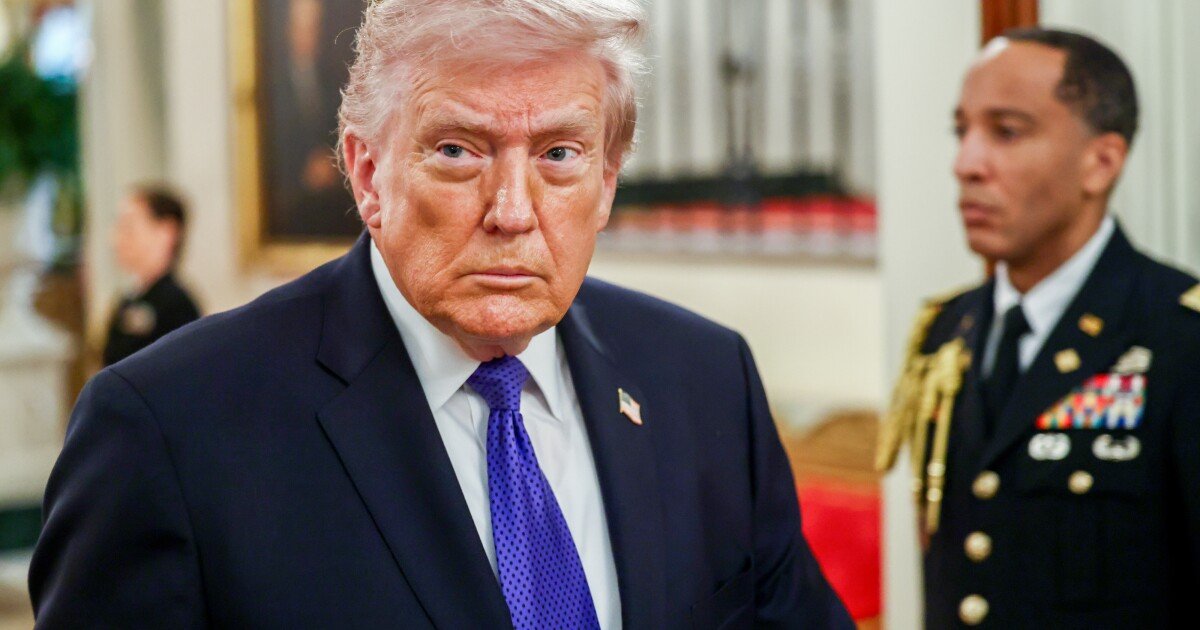
WASHINGTON — Banks could face a costly compliance burden if President Donald Trump issues an executive order requiring banks to collect citizenship information on their customers, experts said.
Processing Content
Reports broke last week that the White House is considering an executive order that would require banks to obtain citizenship documentation as part of banks’ know-your-customer requirements. While banks obtain identification information already when onboarding customers, adding new data and documentation requirements — as would be likely under the order — would not be a simple or inexpensive affair, according to financial policy experts.
“Banks are going to have to hire consultants to be able to analyze the requirements, they’re going to have to map out policies, procedures, programs, data collection, systems and processes across the financial institution,” said Peter Dugas, CEO of Regulatory Intelligence Group. “That’s a heavy lift for most large financial institutions, but then you get into the challenges for community banks.”
While the EO would set the policy, the prudential regulators — namely the Treasury Department, Office of the Comptroller of the Currency, Federal Deposit Insurance Corp., National Credit Union Administration and Federal Reserve — would be the ones tasked with implementing and enforcing the order as part of their know-your-customer rules. Some regulators have already downplayed the costs associated with implementing such a rule.
“I think the additional burden would be minor,” said Comptroller of the Currency Jonathan Gould at a hearing in the Senate Banking Committee last Thursday.
Gould said that, for people who do not have easy access to their birth certificates or who don’t have a passport, there are alternative forms of paperwork, although he didn’t specify what those alternative options would be. He said that employers already collect so-called I-9 employment eligibility data, which requires similar documentation.
“Just like with an I-9, I think there are alternatives available,” Gould said. “Banks have demonstrated an ability to find ways to know their customer under the existing framework.”
Dugas, however, said that Gould’s assessment of the compliance burden is considerably more rosy than what banks can expect. Community banks that are in rural areas have a dispersed customer base, making data collection efforts that much more of a challenge. Whether that data collection would fall on the shoulders of the banks or their third-party partners and vendors — and in which situations — is another ambiguity that could cost a great deal for banks to navigate.
“They’re like, ‘Oh, it’s just a data collection, you should be able to collect this at the point of the loan,'” he said. “But once you start mapping this out, you don’t have common definitions of what a customer is versus what’s transactional. And then you have data brokers, and you have so many other fintechs [and] banking-as-a-service providers that could potentially be captured or not captured by this rule — so where does the compliance obligation sit?”
The order could also have the effect of limiting the universe of customers that banks are able to serve, Dugas said, depending on how the rules are worded. Foreign nationals are not barred from opening accounts and banks are not obligated to turn them away, but many U.S. citizens lack ready access to their birth certificates for any number of reasons. Raising the personal identification standard could end up pushing more people out of the banking system and into more costly financial arrangements, he said.
“People, in most instances, cannot immediately provide proof of citizenship, especially when it comes to something like a birth certificate,” Dugas said. “There’d be a distinct population of individuals who absolutely are going to have that information ready at hand and are super organized. But there’s going to be a subset of populations [that do not] — whether it’s going to be someone who’s 18, who just moved away from home and is no longer in communication with their parents or siblings and is unable to obtain that information, not to mention new citizens in the U.S.”
Anne Balcer, principal at Community Advisory Services, also said there is a distinct possibility that married women who changed their last names and don’t have passports could face difficulty under the order. Community bank customers in rural areas also could potentially lack ready access to their birth certificates if they live far away from where they are kept and can’t arrange travel to retrieve them.
“Other than making a political statement, I’m not sure what we’re hoping to achieve through this,” Balcer said. “I mean, we need less reporting right now, and more meaningful reporting, and more risk-based reporting, as opposed to, you know, just filling the kitchen sink even more.”
The Trump administration has generally moved toward less stringent anti-money-laundering reporting requirements for banks. The Treasury Department, Federal Deposit Insurance Corp. and Office of the Comptroller of the Currency last year released a Frequently Asked Questions guidance document that was meant to cut the compliance burden for banks and other financial firms by reducing the number of SARs that they need to file.
A citizenship data collection executive order would increase reporting requirements substantially, Balcer said. It’ll be especially harmful to small banks, who rely on core service providers for data collection efforts. Larger banks, she said, are more likely to have their own in-house systems or be able to rely on artificial intelligence to speed up a transition.
“Community banks would be solely reliant on their core processors, so there’s no current field in your account opening module or software that includes how you verified or proven integration status, there’s no image option for scanning birth certificates,” she said. “Every time you go to your core provider for an update — even when it’s mandated by regulation — you’re spending tens of thousands of dollars, regardless of the size of the institution.”
Balcer said she worries this additional friction will just end up pushing people out of the highly regulated banking system.
“The idea that you’re collecting and reporting on more information — again, just for the sake of reporting — and discouraging individuals from operating within the traditional and safe banking space,” Balcer said. “Again, I just kind of scratch my head trying to understand what the purpose or actual meaningful outcome that would come about” would be.
