

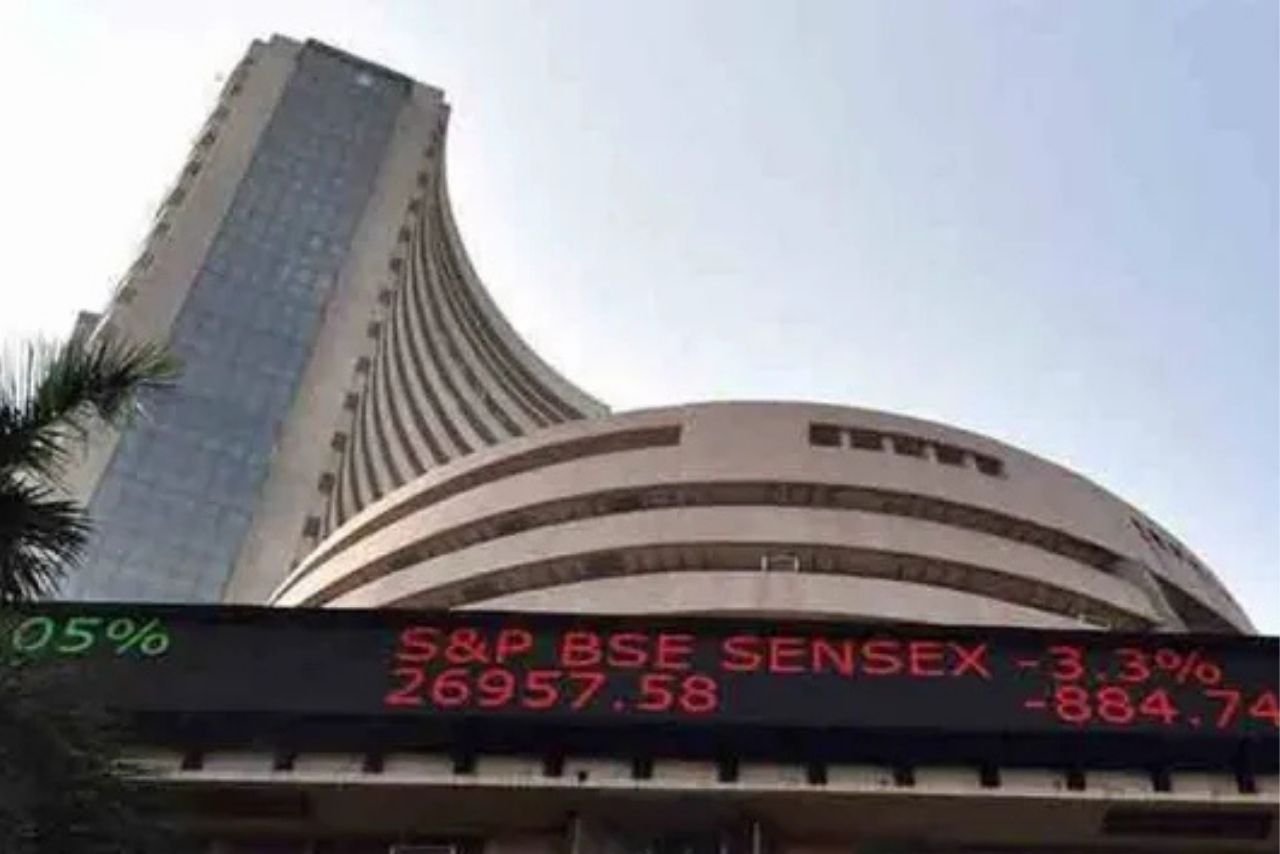
Synopsis: Indian markets tumbled, with the Nifty 50 down 560 points to 24,305 and the Sensex falling 1,796 points (2.24%). Brent above $82, ₹3,295 crore FII selling, and Iran–Israel tensions fueled the sharp decline.
Indian equity markets are trading lower in today’s session, mirroring cautious investor sentiment and rising volatility across major benchmarks. Selling pressure is evident across several sectors, with the broader market also showing signs of strain. Market participants seem to be taking a wait-and-watch stance, resulting in muted momentum and sharper intraday swings throughout the trading session.

Market Snapshot
At the opening on Dalal Street, markets witnessed sharp selling pressure. The Nifty 50, which had closed at 24,865.70 in the previous session, opened lower at 24,388.80 and slipped further to an intraday low of 24,305.40, marking a decline of 560 points from its previous close. Similarly, the Sensex, after ending at 80,238.85 in the last session, opened at 78,528.82, and further slipped to 78,443.20 registering a decline of 1,796 points (2.24 percent), reflecting broad-based weakness in early trade.
Global Market Rout
The weakness in domestic equities mirrors the sharp global selloff. Overnight in the US, the Dow Jones Industrial Average declined 0.83 percent, the S&P 500 slipped 0.94 percent, and the Nasdaq Composite fell 1.02 percent, reflecting risk-off sentiment amid escalating geopolitical tensions.
Asian markets extended the losses sharply. South Korea’s KOSPI plunged nearly 10 percent, marking one of its steepest single-day declines in recent months. Japan’s Nikkei 225 tumbled 3.82 percent, while Hong Kong’s Hang Seng Index dropped 2.3 percent. China’s Shanghai Composite Index also slipped 0.99 percent, highlighting widespread pressure across Asian equities as investors reacted to rising uncertainty in West Asia.
Crude Oil & Strait of Hormuz Concerns
Oil prices remain a key trigger. Brent Crude is trading above $82 per barrel, while WTI Crude Oil hovers near $75–76. Fears of supply disruptions have intensified due to tensions around the Strait of Hormuz, through which nearly half of India’s crude imports pass. Any prolonged blockade could push oil prices higher, worsening India’s current account deficit and inflation outlook.

Escalating West Asia Conflict
The deepening conflict between Iran and Israel, with US involvement, has rattled investor sentiment. Missile strikes, shipping disruptions, and rising insurance costs for tankers have amplified fears of extended instability. Markets are reacting to the possibility of prolonged geopolitical stress affecting global trade and energy supplies.
Institutional Activity & Currency Pressure
Foreign Institutional Investors (FIIs) remained net sellers, offloading equities worth over Rs. 3,295 crore in the previous session, while Domestic Institutional Investors (DIIs) provided some cushion with net buying of Rs. 8,593 crore. Meanwhile, the rupee weakened to 91.47 against the US dollar, with the Dollar Index staying firm, adding to pressure on import-heavy sectors.
Sectoral Damage & Key Levels
Transport, tourism, and oil-sensitive stocks bore the brunt of the selloff, while defence stocks showed relative resilience amid rising geopolitical tensions. Technically, immediate support for Nifty is seen near 24,400, with a deeper support zone around 24,000 levels if panic intensifies. On the upside, the 25,000 mark remains a strong psychological resistance level for any potential recovery.

Disclaimer: The views and investment tips expressed by investment experts/broking houses/rating agencies on tradebrains.in are their own, and not that of the website or its management. Investing in equities poses a risk of financial losses. Investors must therefore exercise due caution while investing or trading in stocks. Trade Brains Technologies Private Limited or the author are not liable for any losses caused as a result of the decision based on this article. Please consult your investment advisor before investing.