

Adobe Stock
Processing Content
Key insight: Branchless and out-of-state banks are harvesting deposits in Florida and lending them out elsewhere. What’s at stake: ‘Carpetbagging banks’ have lead to serious underinvestment in desperately needed infrastructure and affordable housing.Forward look: Miami’s newest billionaire residents are paying big bucks for their megamansions. A surtax on homes costing $1 million or more could help solve the state’s affordable housing crisis.
“Don’t New York My Florida!”
This increasingly popular bumper sticker seen across my Sunshine State captures the political, cultural and fiscal concerns after successive waves of northern migration. First during the pandemic, and now after New York City’s mayoral race and tax hikes.
The influx includes retirees, remote professionals and financial executives relocating to South Florida.
Florida is the fastest-growing state according to the Census Bureau, having overtaken New York as the nation’s third most populous after California and Texas.
This population explosion strains our overburdened highways, schools, hospitals, water systems and other infrastructure, not to mention our fragile environment.
I also recognize when New York “Wall Streets My Brickell Avenue,” it means more businesses and jobs diversifying our tourist-based economy. Beyond international banks, “Wall Street South” now hosts hedge funds, private equity, family offices and other financial institutions.
Of Florida’s 67 counties, I estimate the three South Florida ones — Miami-Dade, Broward and Palm Beach, home of the Southern White House — represent as much as half of Florida’s wealth, including investments, international capital and real estate equity.
As an economist, my greatest concern is affordable housing, now an oxymoron in South Florida.
Wealthy Wall Streeters and others escaping high taxes have made a bad situation worse.
South Florida is ground zero for our nation’s affordable housing crisis, worse even than New York or San Francisco. Our sky-high home prices and rents now rival theirs, but wages don’t.
Miami has one of the nation’s worst poverty rates. It’s tied with New York for the worst income inequality, mirroring countries like Colombia.
How bad is it? Some local businesses now advertise “Help wanted – Housing provided.” When employers bundle shelter with wages, affordable housing is at DEFCON 1.
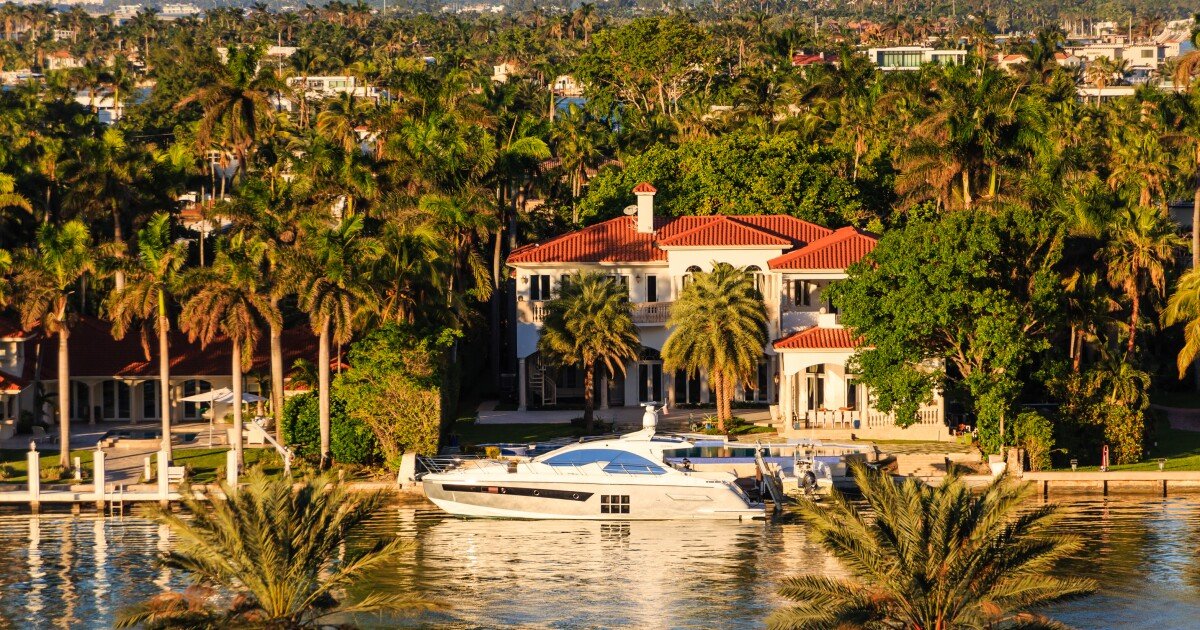
Every relocating “one percenter” buying a waterfront megamansion requires ten or more workers to clean, cook, launder, deliver Amazon packages, landscape, maintain equipment, and care for children and pets.
These low- and moderate-income, or LMI, service workers are essential to the functioning of the high-end residential economy.
But, where are they supposed to live?
With Miami-Dade County being 86% minority, the housing affordability burden disproportionately falls on communities of color.
Miami has long been called New York’s sixth borough. Just as the Bronx is New York’s only affordable borough, Homestead has become “Miami’s Bronx.” Instead of a short subway ride to work, it’s a two-hour commute on congested roadways. Some entrepreneuring Homesteaders have hooked their electric, water and sewer connections to RVs, campers and trailers parked in their yards, collecting $800 to $1,200 monthly on these illegal dwellings.
Meanwhile, our governor and some local business leaders are encouraging more people and businesses to move here, emphasizing eliminating property taxes and other tax advantages. This, unfortunately, is not a sustainable strategy given continued infrastructure demands and our worsening affordable housing crisis.
I prefer private rather than government fixes for social problems, but they don’t always work. Because the one percenters, making $500,000 or more, exacerbated our affordable housing crisis, I proposed taxing them during the first pandemic migration wave.
My 1% surtax proposal on homes costing $1 million or more would flow into an affordable housing fund. This “1 on 1” surtax for migrating one percenters enjoying our beautiful weather and water in the nation’s top tax haven addresses a problem they helped create. Call it a “paradise tax.”
Miami’s newest billionaire residents are paying big bucks for their megamansions: Larry Page, $173 million; Mark Zuckerberg, $200 million; Jeff Bezos, $237 million; and Ken Griffin, $419 million. A $10 million fund from this $1 billion of new residences could subsidize approximately 50 affordable rentals, hopefully enough for workers servicing these four billionaires.
My 2021 proposal went nowhere, so I refocused on the private sector, namely banks benefiting from Florida’s more than $1.5 trillion of estimated deposits. Less than two-thirds is held in Florida bank offices, with the remainder in branchless and nonlocal banks as well as credit unions.
With just 5% of reported FDIC deposits, Florida represents about 7% of the nation’s population and as much as 9% of wealth, including foreign assets held or managed in Florida. It’s now #2 in IRS gross estates, residential housing value, millionaires and international banking offices.
Most banks, especially those based here, do their fair share of Community Reinvestment Act reinvesting, helping with affordable housing. This is not the case, however, for two types of what I’ve long called “carpetbagger banks,” those with branches and the others without.
Out-of-state carpetbagger banks open Florida branches to harvest deposits and lend them elsewhere. Section 109 of the Interstate Bank and Branch Efficiency Act requires nonlocal banks to have a loan-to-deposit ratio at least half that of Florida banks. Since violations are not disclosed by regulatory “mall cops,” that law is toothless. CRA exams have individual state ratings, but a failing Florida rating rarely drags down an interstate bank’s overall rating.
Internet, credit card, fintech and other branchless banks are the most egregious carpetbaggers, siphoning more than $200 billion of Florida deposits without any required reinvestment. Large branch-based banks might reinvest about $4 billion or 2% of that total annually in Florida community development. Branchless banks’ CRA benefits don’t go to Florida but rather their home bases in Delaware, South Dakota, Utah and even New York.
My CRA solution to this weblining is the 5% Deposit Reinvestment Rule. Any bank taking 5% or more of its deposits from any metro area must reinvest a proportionate amount benefiting its LMI communities and households. Former Comptroller Joseph Otting adopted a variant of the 5% rule, but that OCC CRA final rule was rescinded. Politically powerful branchless banks oppose this desperately needed CRA modernization.
Bottom line: Without a 1% surtax or 5% rule, we continue to kick the growth, infrastructure and affordable housing can down the Florida Turnpike until new taxes are required. If that happens, we cannot blame New York or anyone else but ourselves.
Maintaining the status quo may keep us first in growth and wealth but last in public policy planning.
How do we Common Sense My Florida?
