

by Jeroslyn JoVonn
March 30, 2026
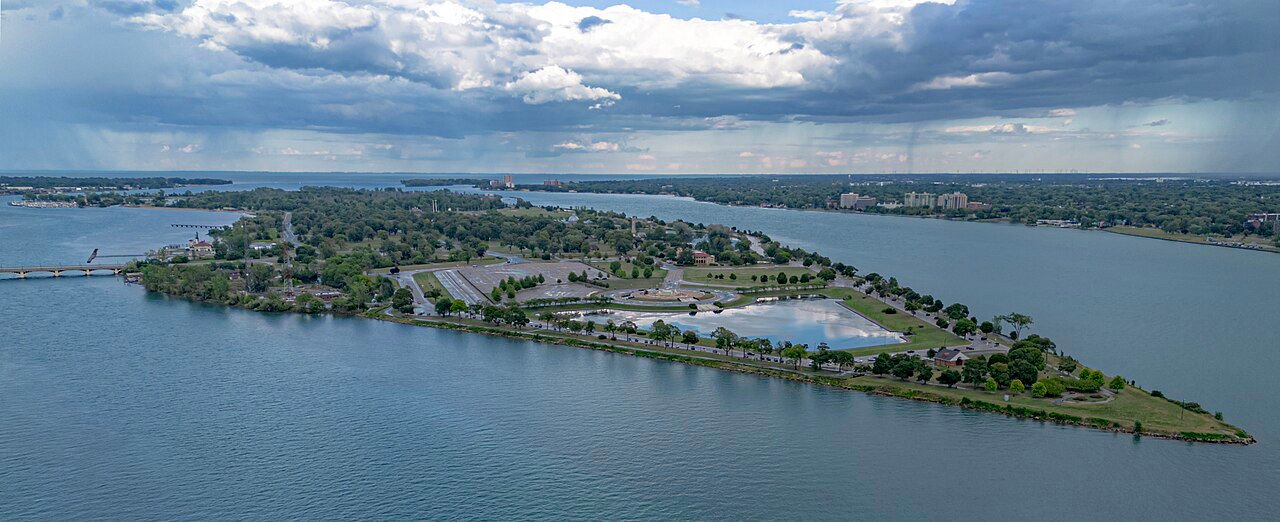
Michigan voters and Detroit residents appear to be on the same page about transforming Belle Island into the country’s first special economic zone.
A proposal backed by a majority of Michigan voters and more than two-thirds of Detroit residents aims to transform Belle Isle into the nation’s first special economic zone.
Support for the plan grew after voters were given more details, according to a new poll, Click on Detroit reports. Backed by Belle Isle Freedom City Chairman Rodney Lockwood, the proposal would transform the 982-acre island park into a high-density development that would house up to 50,000 residents.
“Belle Isle would become the country’s first special economic zone with a great degree of autonomy with regard to taxation and regulation,” Lockwood said.
The plan would include high-end, mixed-use housing, entertainment, a monorail, restaurants, and retail space, along with a major investment deal in which developers would make a one-time $1 billion payment to Detroit in exchange for a long-term lease, plus $50 million annually for the city. It also wouldn’t require any local tax dollars, Lockwood declares.
“It’s a big plan, there’s no doubt about it,” Lockwood said. “We would do it with no federal money, or state money, or taxpayer money. It would be totally privately funded. From a sizing standpoint, it would be the largest, privately funded project in the United States.”
Belle Isle is operated as a state park by the Michigan Department of Natural Resources, but Rodney Lockwood argues the island is underutilized.
“Our plan is to maintain it as a park, but to take the underutilized portions and bring people in to live on the island; build a community of up to 50,000 residents,” Lockwood explained. “It’s beautifully located. This would really be ideal to establish a community there.”
The poll, conducted in November 2025, surveyed 616 likely statewide voters and 197 Detroit voters and was commissioned by Belle Isle Freedom City. Initial support stood at 42% statewide and 71% in Detroit, but shifted to 51% statewide and 68% in Detroit by the end of the survey, according to Steve Mitchell, president of Mitchell Research & Communications.
“A majority, bare majority but nevertheless a majority, of Michigan residents and two-thirds of the city of Detroit voters who responded to the survey were in support of the concept after they heard it,” Mitchell said.
The project would require an estimated $50 billion investment, creating 20,000 construction jobs over a decade and 46,000 permanent positions, according to a press release. Lockwood described the plan as a potential economic boost for the region.
“If it were allowed to go forward, it’s a slam dunk to be a positive economic uplift for the city of Detroit and for the region and for the state,” he said.
If approved, the proposal would still face several hurdles: federal legislation would be required to authorize special economic zones, the state would need to pass its own law, and the city would have to sign off, either through the mayor and City Council or a voter referendum.
Some residents have also raised concerns about whether the homes planned under the project will be affordable.
“The people who like to come to this place and bring their kids to play could probably never afford to live here,” said resident Cheyanne Bradley.
“If you have people that’s living here and it’s going to be high-end residents, I don’t foresee that that is going to play well long term with the things that are public in this space,” said resident Kamaria Washington.
RELATED CONTENT: Spike Lee Makes Fashion Statement At The Oscars With $950 Gold Cassette Bag By Detroit Designer Runyaro Richardson
