

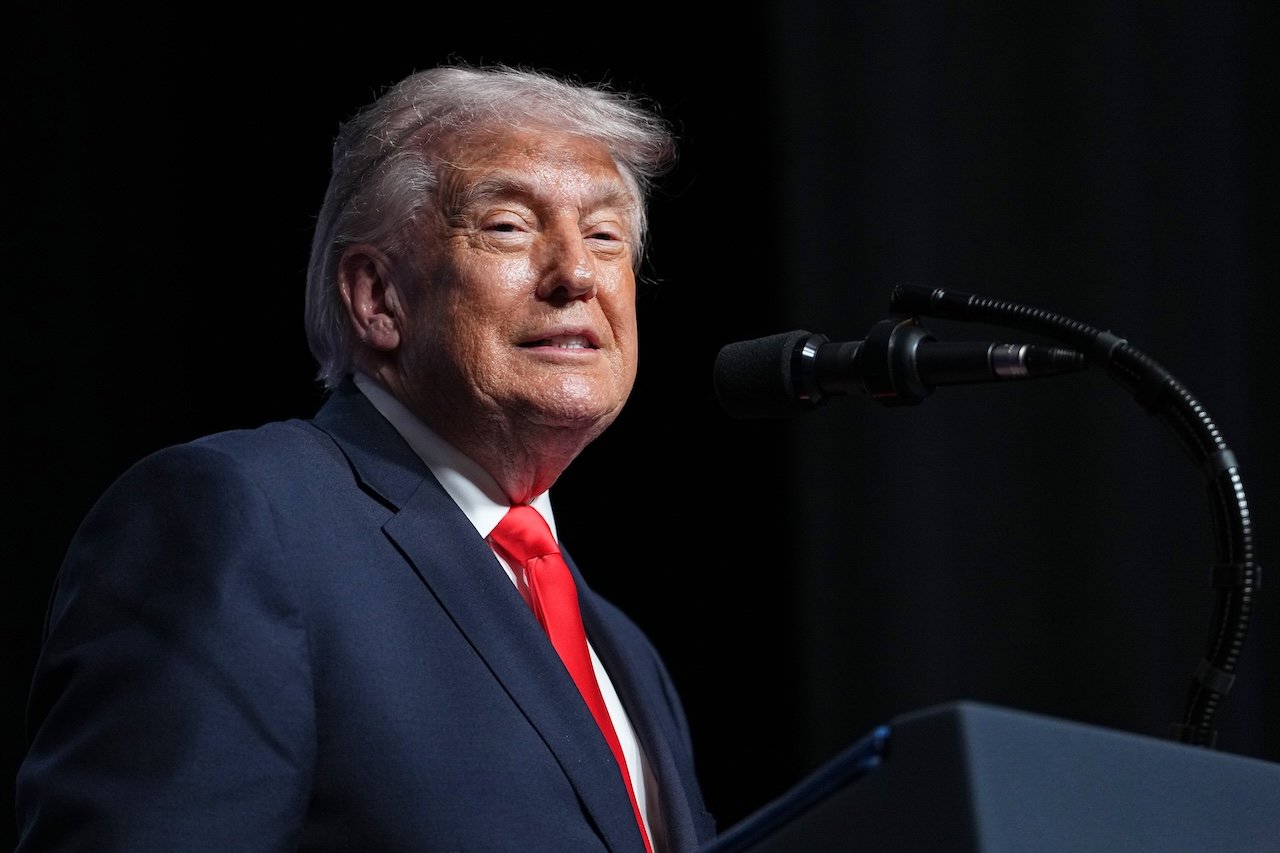
President Trump signed an executive order on April 30, 2026, directing the Treasury Department to launch TrumpIRA.gov by January 1, 2027 — a new federal portal that will list low-cost IRAs eligible for a match of up to $1,000.
The benefit being promoted isn’t technically new, however, was created under the SECURE 2.0 Act, signed into law by President Biden in December 2022.
Why it matters: The order brands a federal IRA portal around the President’s name, but the underlying $1,000 match (the Federal Saver’s Match) was already scheduled to take effect in 2027 under existing bipartisan law. It replaces the older Saver’s Credit. The order does not create the match or appropriate new funding for it.
The Biden-era origin: The Federal Saver’s Match comes from Section 103 of SECURE 2.0. Starting in 2027, eligible savers under specific income thresholds can receive a 50% federal match on up to $2,000 in retirement contributions, capped at $1,000 per year.
It replaces the older Saver’s Credit, a nonrefundable tax credit that encouraged savings. The order itself acknowledges this, stating its policy aim is to “increase public awareness of the Federal Saver’s Match enacted in the bipartisan SECURE 2.0 Act.”
What the order actually does:
Directs Treasury to build TrumpIRA.gov by January 1, 2027Sets standards for listed IRAs: 0.15% maximum net expense ratio, index-based investment menus, no minimum balance requirementsTells Treasury and Labor to issue worker-protection rules and guidance on charitable contributions to IRAsAsks Treasury for legislative recommendations to codify portable, low-fee accounts for workers without employer plans
By the numbers:
50% annual match on contributions, up to $2,000 (for a maximum $1,000 in matching funds)0.15% max expense ratio on listed IRAsJanuary 1, 2027 launch deadline for TrumpIRA.gov
Who this targets: Independent contractors, gig workers, self-employed Americans, part-time employees, and small-business workers — groups that historically lack 401(k) access. The Thrift Savings Plan (TSP), referenced as a model, is the federal employee retirement system known for very low expense ratios.
How this connects: Roughly half of private-sector workers have no access to a workplace retirement plan, per BLS, and IRA contribution rates among gig workers remain low. The Saver’s Match (whatever name it carries) is the largest expansion of the Saver’s Credit since that program was created in 2001.
What to watch: Treasury still has to publish criteria for which IRA providers qualify, finalize how match contributions flow to accounts (the match is paid into the IRA, not the taxpayer), and resolve how non-filers will claim the benefit.
A deeper question is whether a federal “approved list” of private IRAs creates fiduciary risk and is likely to draw industry comment before the January 2027 launch.
Don’t Miss These Other Stories:
